How clients choose an accountant
Most people don’t compare ten firms. They open two or three that look serious and call the first one that earns their trust and makes contact easy. So an accounting firm’s website shouldn’t be a glossy brochure. It should be a short path to a phone call.
What a prospective client wants to know in the first few seconds:
- Do you take on their kind of company: sole trader, limited company, VAT-registered, with staff.
- What exactly the service includes: bookkeeping only, or payroll, returns and dealing with the tax office too.
- Can they work with you remotely: by email, with electronic documents, without visiting every month.
- How to reach you right now: phone, Viber or a short form.
What we build for an accounting firm
- A home page with a clear offer. Who you are, which businesses you serve and three ways to get in touch above the fold.
- Service pages. Separate pages or clearly separated sections for bookkeeping, tax advice, payroll, year-end accounts and company formation, so Google can show your site for specific searches, not just “accountant”.
- Call and Viber buttons. One tap on a phone, with a call bar that stays at the bottom of the screen.
- An enquiry form. Short, spam-protected, delivered straight to your inbox.
- Questions and answers. Filing deadlines, switching accountants, which documents to bring. The answers save time for you and for the client.
- Contact details and a map. Address, hours, phone numbers and a lightweight map that doesn’t slow the page down.
- Technical SEO and structured data. Google and AI assistants understand that you’re an accounting service, where you are and when you’re open.
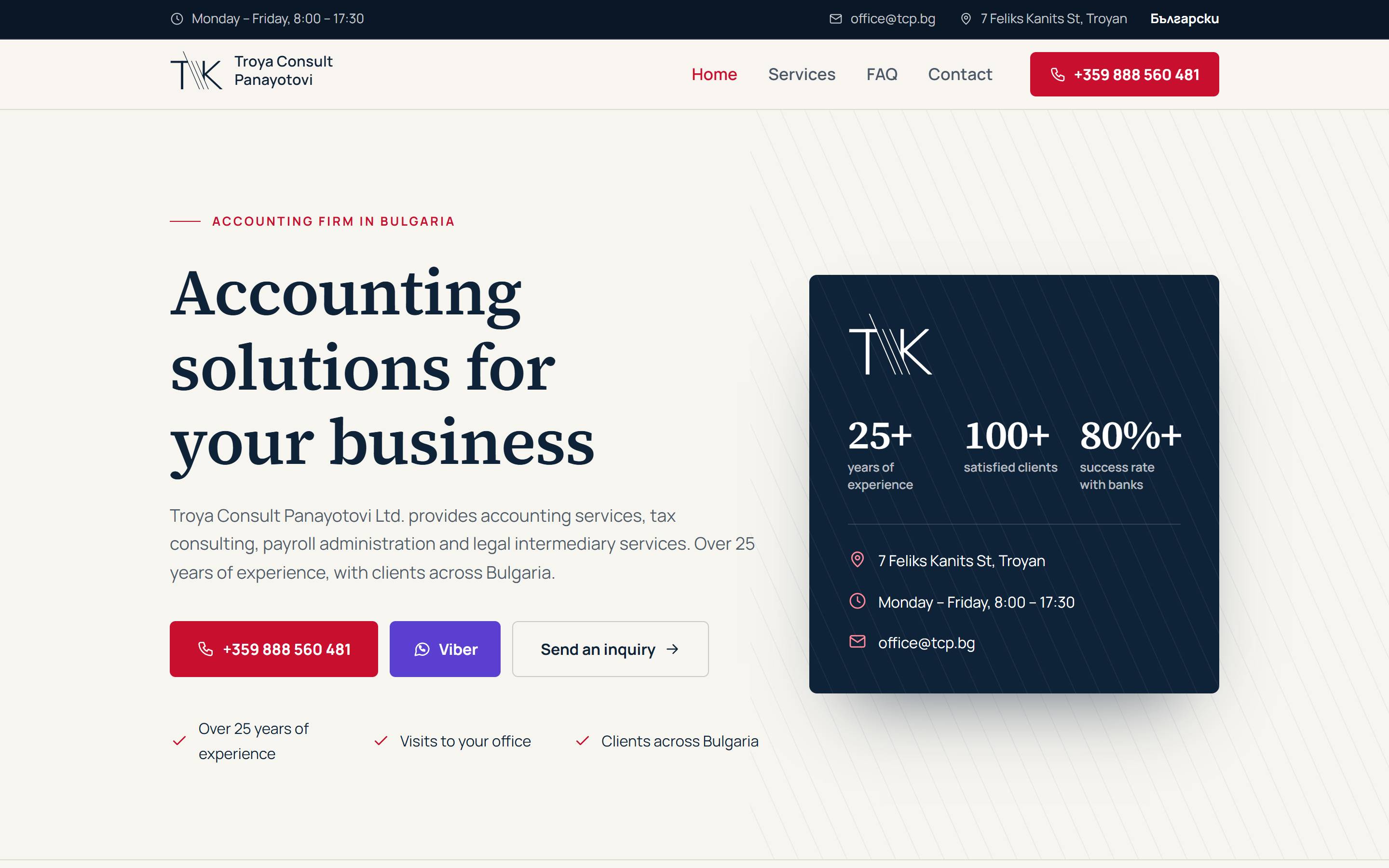
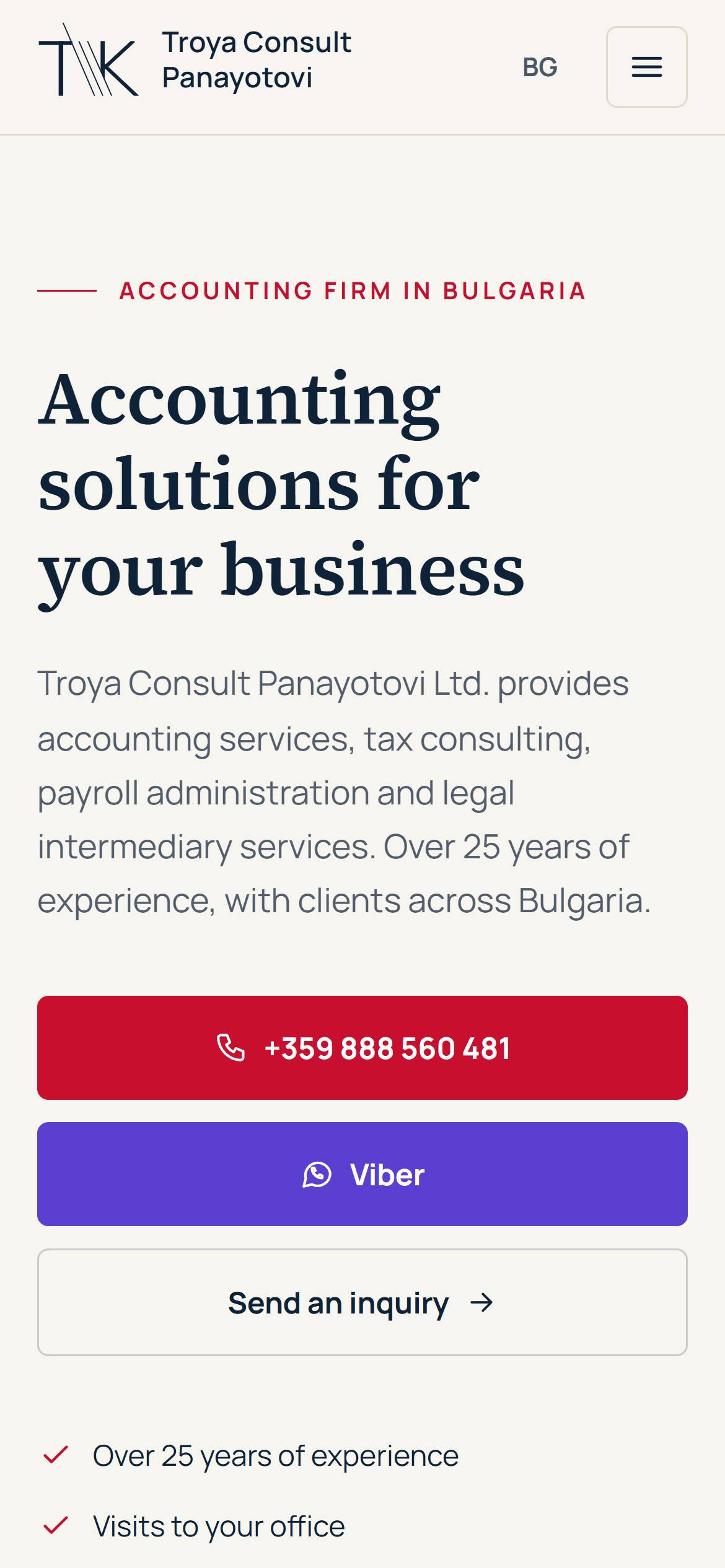
Example: Troya Consult in Troyan
In 2026 we rebuilt tcp.bg, the website of an accounting firm in Troyan, Bulgaria. It runs in Bulgarian and English, has call and Viber buttons, an enquiry form, a ten-question FAQ and structured data with the company ID, VAT number, opening hours and list of services. On mobile it scores 99–100 in Lighthouse. The details are in the case study.
Cost and timeline
The build is €0 upfront. After launch you pay €150 a month for 24 months, which covers hosting, domain, updates, daily backups, support and content edits, such as new copy when a tax deadline changes. Most sites go live 7–10 days after we receive the content.
Already have a site you want to move without breaking email? Read how to move a website without losing email. All the terms are on the pricing page.