Short answer: A beauty salon website should turn interest into a booked appointment. Show each treatment with its price and duration, and prove quality with your own unfiltered results. State your deposit and patch-test rules, and let clients pick a free slot at any hour without messaging you. Everything else on the site supports that booking.
How do salon clients search and decide?
Salon searches are local and specific. People rarely type “beauty salon”; they type “gel nails [area]”, “brow lamination near me”, “balayage price” or “microblading touch up”. Many have already seen your work on Instagram or TikTok and come to the website to answer practical questions: what it costs, how long it takes, whether it hurts, when you’re free.
The decision is visual and fast. A client compares results photos, checks reviews on your Google profile, then looks for the booking button. If she has to message you to learn the price, she often opens the next salon’s page instead. The evening matters too: plenty of clients book outside opening hours, when nobody can answer the phone.
What should the site include, and why?
- One page per treatment. “Lash lift and tint” and “Russian volume lashes” are different searches from different clients. Each page covers duration, price, who it suits, preparation, aftercare and how long results last, with a booking button for that exact service.
- Booking that matches how you work. Treatment lengths, cleanup time between clients, which therapist does what, and how far ahead people can book. A system that double-books or ignores buffers creates more work than it saves.
- A clear booking policy. Deposits, the cancellation window, late arrivals and what happens to the deposit if someone doesn’t show. Written once, linked from every booking.
- Patch-test information. Lash and brow tints and hair colour normally need a patch test beforehand, so the site should say when and how to book it, and the booking flow should not let someone skip it.
- Your results and your people. A gallery of your own work by treatment, and short profiles with training and certificates. That is what separates you from the salon two streets away.
- Gift vouchers. For many salons they are a meaningful seasonal earner, and selling them online is straightforward.
Pitfalls in this industry
Prices that differ between Instagram, the booking tool and the website erode trust instantly, so keep one source of truth. Heavily filtered “after” photos can breach advertising rules and attract complaints when the real result differs; the ASA has ruled against filters that exaggerate a product’s effect. If you offer aesthetic injectables, be careful. In the UK botulinum toxin is a prescription-only medicine and can’t be advertised to the public. Those pages need cautious, consultation-led wording, and the rules in your country should be checked. Finally, a slow site stuffed with full-size photos loses mobile visitors before the first image loads; we compress and lazy-load galleries.
A site with the same structure: Optimus Center
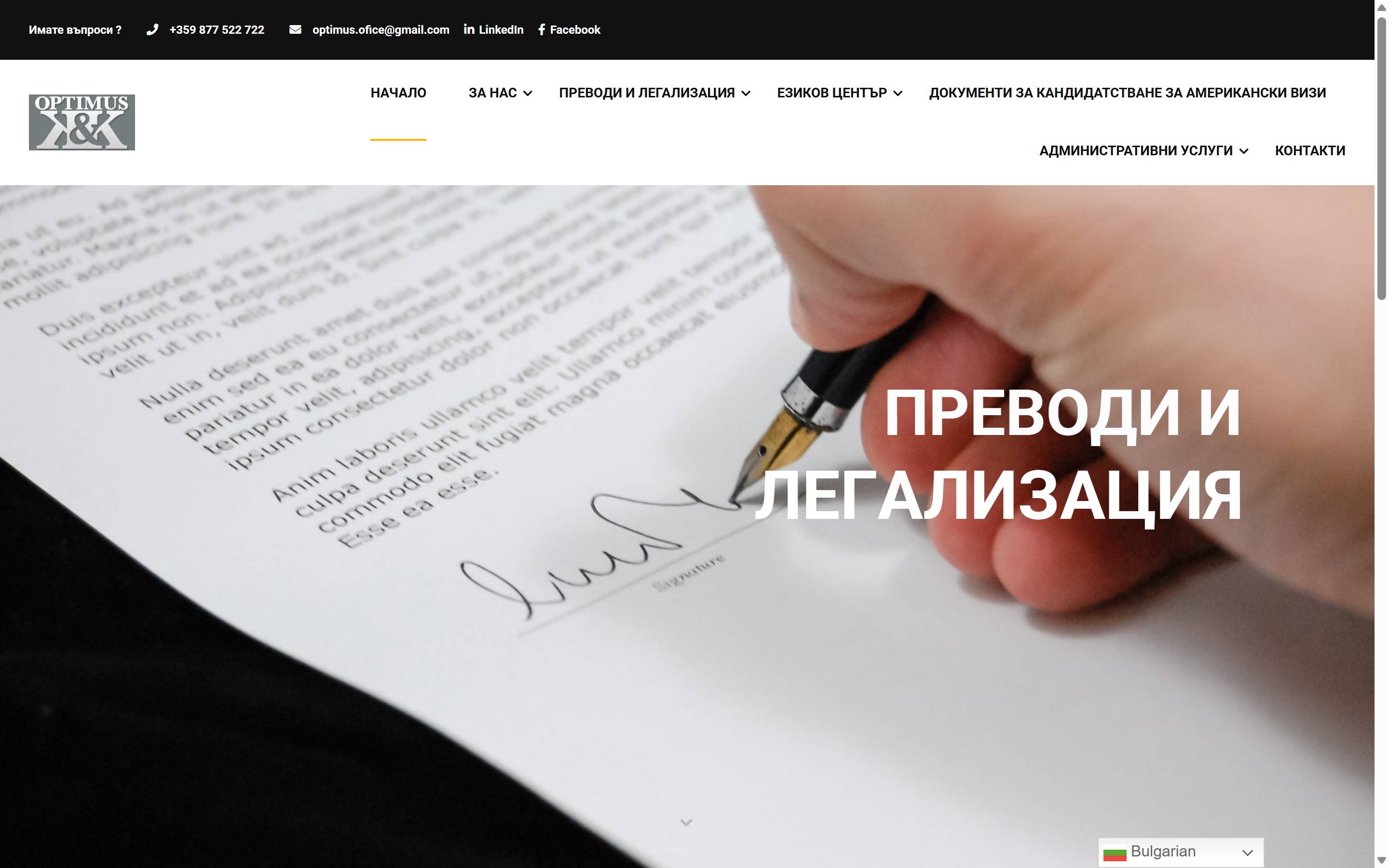
Our portfolio doesn’t include a salon yet. The closest structure is optimuscenter.com, a translation agency and language centre in Vratsa. Every course has its own page covering levels, formats and what’s included, the home page carries a short sign-up form, and a long FAQ answers the questions people would otherwise phone about. A salon site needs the same pattern: a page per treatment, with booking as the obvious next step. The case study shows how it fits together.
What to gather before we build
Your full treatment list with durations and prices, the booking tool you use (or want), and your deposit and cancellation rules. Add 10–30 unedited photos of your work with client consent, and a few lines about each team member. We usually launch 7–10 days after receiving it. The care plan is €150 a month excl. VAT with €0 upfront.
Compare the pay monthly website plan with a one-off build in what a small business website costs, or send us your treatment list.