Short answer: A cleaning company website should win recurring clients by making three things obvious. Show exactly what each clean includes, what it costs for a home or office like theirs, and why your staff can be trusted with keys. It should cover the areas you serve by name and collect quote details in one short form.
Who is actually buying a clean?
Domestic and commercial cleaning look similar from the outside but are bought differently, and mixing them on one page serves neither.
A household client searches “cleaner near me”, “weekly cleaner [area]”, “oven cleaning” or “end of tenancy cleaning [town]”. They decide on price, trust and convenience: can you come on a Thursday, will it be the same person each time, what if they’re out. Reviews on your Google profile and word of mouth from neighbours matter a great deal.
A commercial client is an office manager, a property manager or a facilities buyer. They search “office cleaning company [city]” or “commercial cleaners”, want a site visit and a written specification, and care about consistency, out-of-hours access, supervision, contracts and insurance documents. They may also need risk assessments and evidence of how you handle cleaning chemicals safely, such as COSHH assessments in the UK.
Then there is a third, bursty stream: one-off jobs. End-of-tenancy cleans are tied to deposit returns and landlord check-outs, after-builders cleans follow renovations, and short-let turnovers need fast, reliable changeovers between guests. Each deserves its own page because each is searched separately and often arrives through letting agents, builders or hosts.
What the website needs to do
- Define every service. A standard clean, a deep clean and an end-of-tenancy clean differ a lot. A simple checklist of what’s included (inside the oven, inside cupboards, windows, walls) prevents disappointment and disputes.
- Show prices the way you quote. Bedrooms and bathrooms for homes, hours and frequency for regulars, a site visit for offices. Say whether supplies and equipment are included.
- Ask the right questions up front. Property type and size, frequency, preferred days, pets, parking, how you’ll get in. The answers let you reply with a real price.
- Name your areas. Towns, districts and postcodes you cover, written as text, not only a map image, so search engines can read them.
- Explain trust in concrete terms. Insurance cover, how you recruit and vet, key and alarm-code handling, and your re-clean or complaints process if you offer one. In the UK, many clients ask about basic DBS checks; mention them only if your staff have them.
- Recruit. Many cleaning businesses are limited by staff more than by demand, so a simple “work with us” page often earns its place.
What tends to go wrong?
Vague promises like “deposit back guaranteed” that your terms don’t actually support. Prices that differ between the website, the price list you send by email and what the team charges on the day. One generic “cleaning services” page trying to rank for everything. And photos of sparkling show-home kitchens from stock libraries, which visitors recognise; your own before-and-after shots of a tired oven are far more persuasive.
A similar site we built
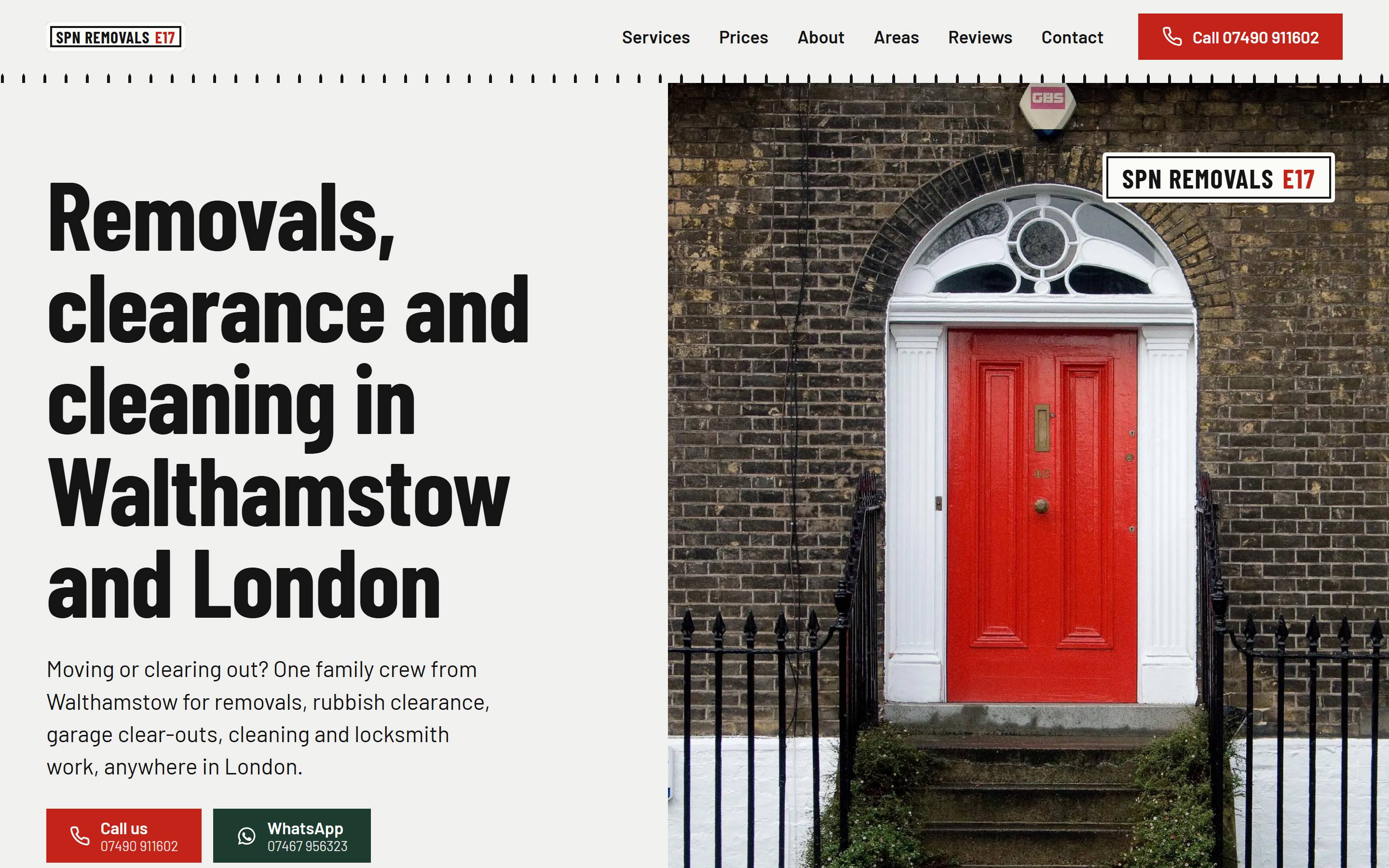
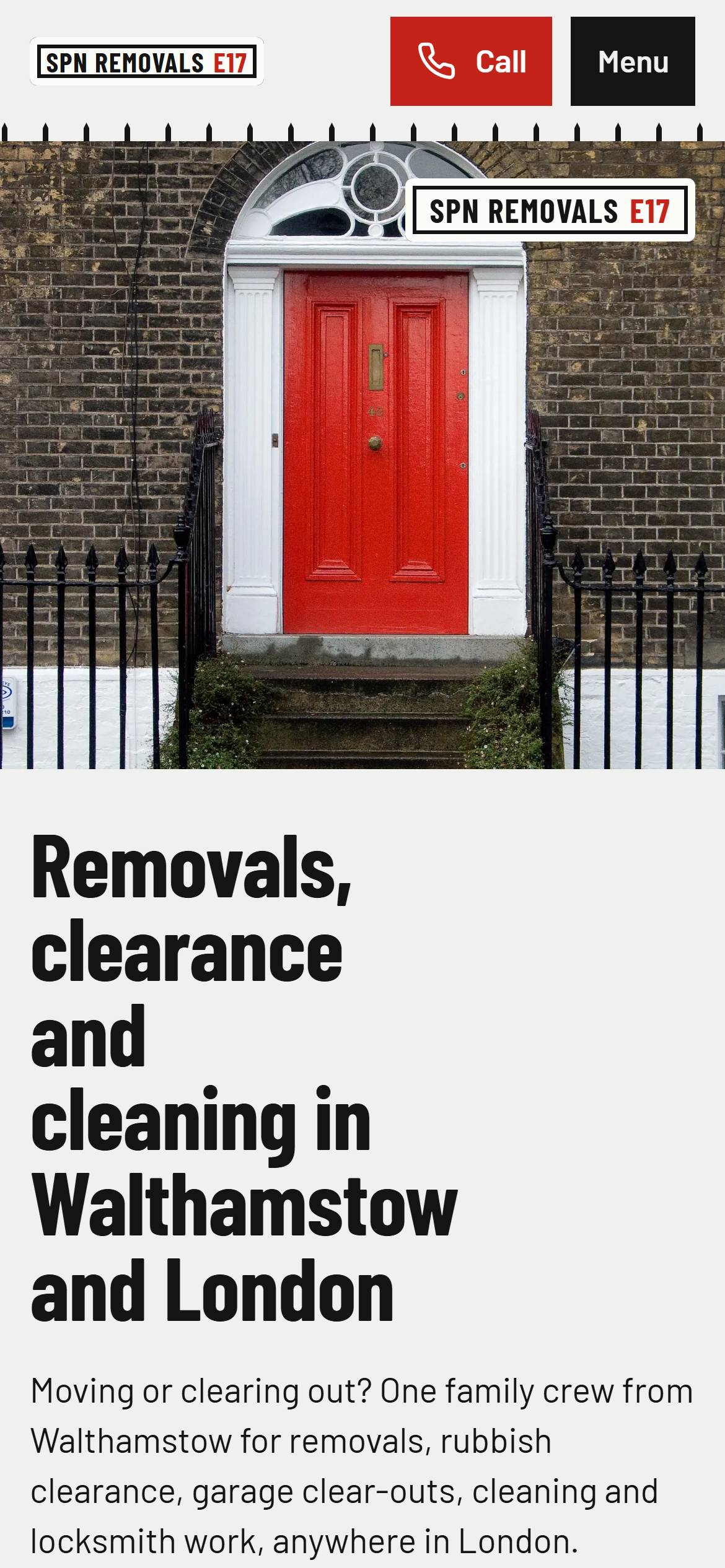
The closest live example is SPN Removals, a London removals and clearance firm that also does cleaning, including end of tenancy. Its site gives cleaning its own page and replaces the usual contact form with a 3-step quote form that opens WhatsApp with the job already written out, plus one-tap call and a postcode check. That kind of low-effort contact suits busy tenants, landlords and letting agents.
Getting ready
Bring your service list with what each includes, your pricing method, the areas you cover, insurance and vetting details, and some real photos. We typically launch 7–10 days after receiving content. On a pay monthly plan it’s €150 a month excl. VAT, nothing upfront.
See the website as a service model, the preparation checklist, or get a free proposal.