Short answer: a carpenter’s or joiner’s website is mainly a portfolio. It should show your own projects sorted by type, give each good project a page with the brief and the close-up details that prove the craft, explain what drives the price of bespoke work, and collect photos and rough sizes in the quote form so you can price without a wasted visit.
Your work is the sales pitch
Homeowners and designers choose a joiner by looking. They might find you through a search like “bespoke wardrobes” or “oak staircase” plus a town, or through a recommendation, but they decide on the photos. Stock images of a generic kitchen do the opposite of what you want: they make your business look like everyone else’s.
So the site is built around your projects. Each type of work gets its own gallery page (kitchens, staircases, fitted wardrobes and alcove units, doors and windows, garden rooms, decking and pergolas, or whatever you actually do), so a visitor sees only what they’re interested in. Pages named for the work also help you show up for those searches, which a single “Gallery” page can’t do.
A project page tells the story, not just the result
The best projects deserve a short page of their own:
- The brief: “Under-stair storage for a 1930s semi, with pull-out drawers for shoes and coats.”
- The materials: the timber, the board, the hardware, the finish.
- The details: close-ups of joints, edges, grain matching, scribing to an uneven wall. This is where craft shows, and where you stand apart from flat-pack fitters.
- The before: if you have it, a photo of the space before you started.
It doesn’t need to be long. Three or four sentences and eight good photos make a page that someone will forward to their partner with “look at this one”.
Help people judge price before they ask
Bespoke joinery is hard to price in advance, and many people don’t know whether a fitted wardrobe costs hundreds or thousands. If your site says nothing, you spend time on enquiries that were never going to work.
Explain what affects cost: timber species, size, complexity, finish, and whether you fit as well as make. If you’re comfortable, give typical ranges for common jobs. Then make the quote form do the groundwork: photos of the space, rough measurements, the style they like (they can attach a picture), and a budget band. You’ll know before you visit whether the job suits you.
Be honest about lead times too. Many good joiners are booked weeks ahead. Saying “we’re currently booking work for March” sets expectations and makes you look sought-after rather than unavailable.
Show how it gets made
A short page about your workshop and process helps more than you might expect: a few photos of the bench, the machines and a piece in progress, plus a plain description of the steps from survey and drawing to making and fitting. It answers the “can they really make this?” question and gives your site something no competitor can copy.
A renovation site that shows the same idea
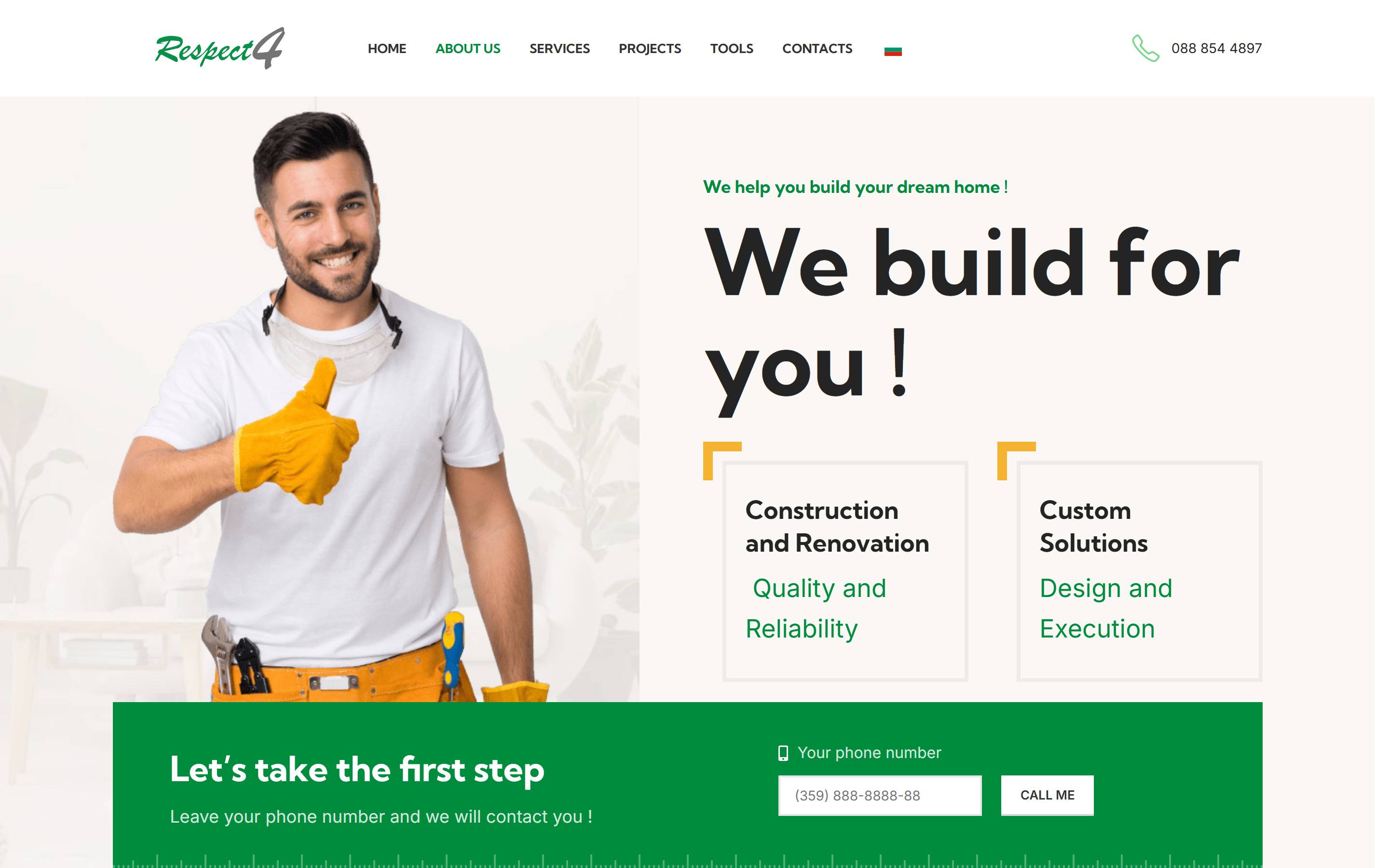
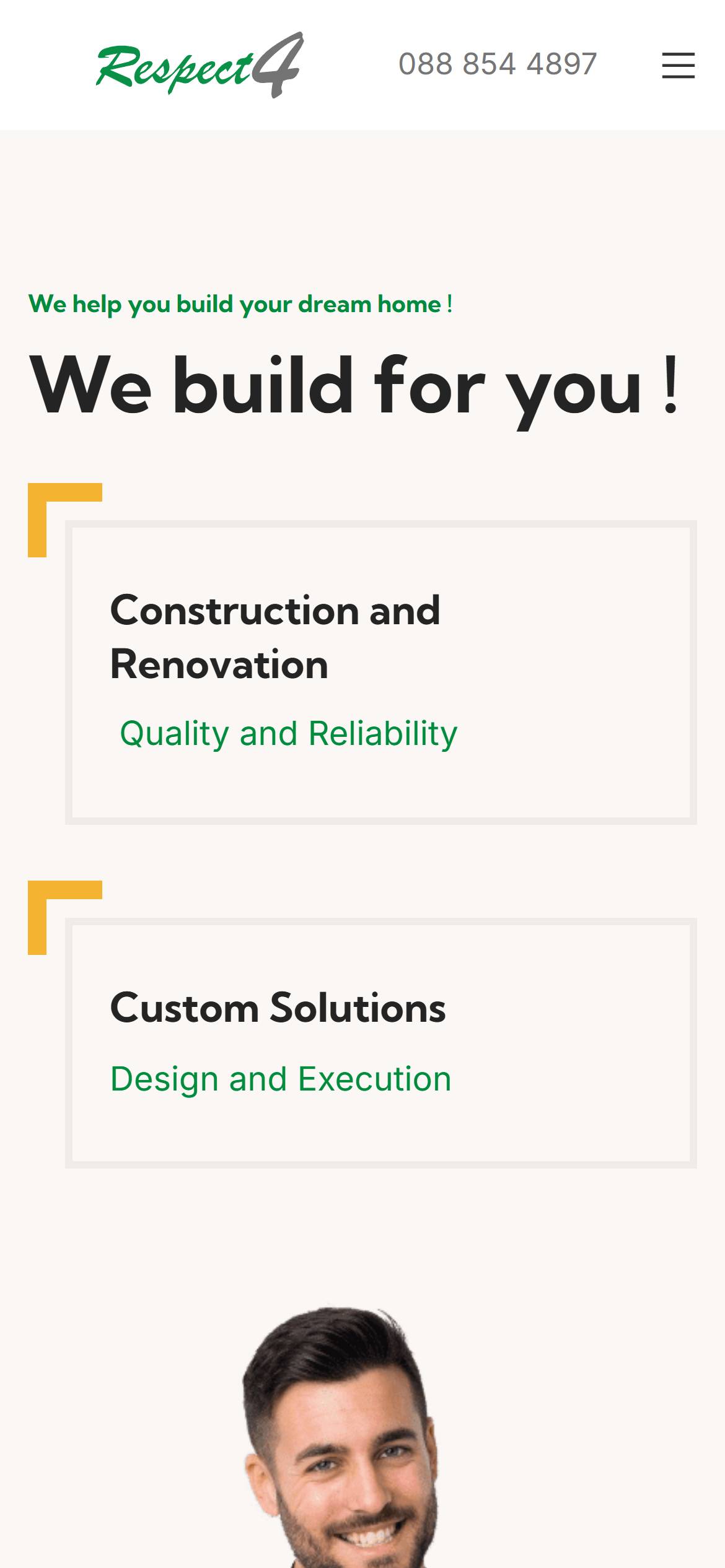
Our portfolio doesn’t include a joinery firm yet. The nearest example is Respect 4, a construction and renovation company whose site combines work photos with a simple callback form and a clickable number in the header. For a joiner we’d give the portfolio more room, with project galleries by type and a quote form that takes photos and measurements.
What to prepare before the build
Choose your 8–15 best projects and gather the photos, including close-ups and any before shots. Write a line or two on each, list the types of work you want more of and the areas you cover, and note your usual lead time. Access to your Google Business Profile helps keep details consistent. Once we have that, most sites go live in 7–10 days, for €0 upfront and €150 a month excl. VAT for 24 months (roughly £130 or $175), with new projects added for you whenever you send them.
See the pay monthly website plan, read our guide to small business website costs, or tell us about your business.