Short answer: A plumber’s website has to win two different customers. One has water coming through the ceiling and needs a number in seconds; the other is pricing a new boiler and wants to compare. So it needs a tap-to-call button, honest callout charges, the postcodes you cover and proof of the registrations you genuinely hold.
Is the caller panicking or planning?
Look at how people actually search. Emergency searches are short and urgent: “emergency plumber near me”, “burst pipe”, “no hot water”, “boiler not working”, plus a town name. They happen on a phone, often standing in a wet kitchen, and many of those people never reach your homepage: they tap the call button straight from your Google Business Profile in the map results. The ones who do click through give your site a few seconds to confirm three things: you’re local, you’re available, and you won’t charge a fortune for turning up.
Planned work is the opposite. “Combi boiler replacement”, “bathroom fitter”, “power flush cost”, “underfloor heating installer”. These customers read several sites, check reviews and ask two or three firms to quote. They want detail: which boilers you fit, what the job involves, how long it takes, and whether you’ll take the old one away.
The site should therefore have two paths. Emergencies get a fixed call bar on mobile and a short page that says what you attend and when. Planned work gets proper service pages and a quote form. Mixing the two, with a single “Services” list of twenty bullet points, serves neither.
A practical touch for the emergency page: tell people what to do while they wait, such as finding the stopcock, switching off the boiler and keeping clear of electrics near water. It’s genuinely useful and shows you know the job.
What should a plumber say about callout charges?
Price is the question most emergency callers are afraid to ask. A short, plain explanation removes it. Say whether you charge a callout fee or a first hour, and the hourly rate after that. Explain what changes in the evening, at weekends and on bank holidays, whether parts are extra, and how you take payment. If you have fixed prices for routine jobs, such as an annual boiler service or replacing a tap, show them. If you don’t, explain what the price depends on.
Being upfront also filters the calls. People who think a callout should be free move on, and the ones who ring already know your terms. Avoid two common mistakes: claiming “24/7” cover you don’t actually provide, and advertising “no callout fee” when the first hour is charged anyway.
Gas Safe and the other credentials people check
In Great Britain, any business or self-employed engineer doing gas work must by law be on the Gas Safe Register, under the Gas Safety (Installation and Use) Regulations 1998, and Northern Ireland has equivalent rules. Engineers carry an ID card listing the work they are qualified to do. If you are registered, show your registration number and the categories that apply, and point customers to the register so they can check it themselves. If you don’t do gas work, say so plainly, so a customer with a gas boiler fault doesn’t assume otherwise. Other countries have their own schemes (in Ireland, gas installers register with RGII), and the site should name the one that applies to you.
The same rule covers everything else: unvented hot-water qualifications, manufacturer-approved installer status for particular boiler brands, trade association membership and public liability insurance. List what you hold, and never use the logo of a scheme you’re not in. Customers do check, and so do competitors. Electricians face the same scrutiny with their own schemes; see websites for electricians.
A site we built with the same quick-contact idea
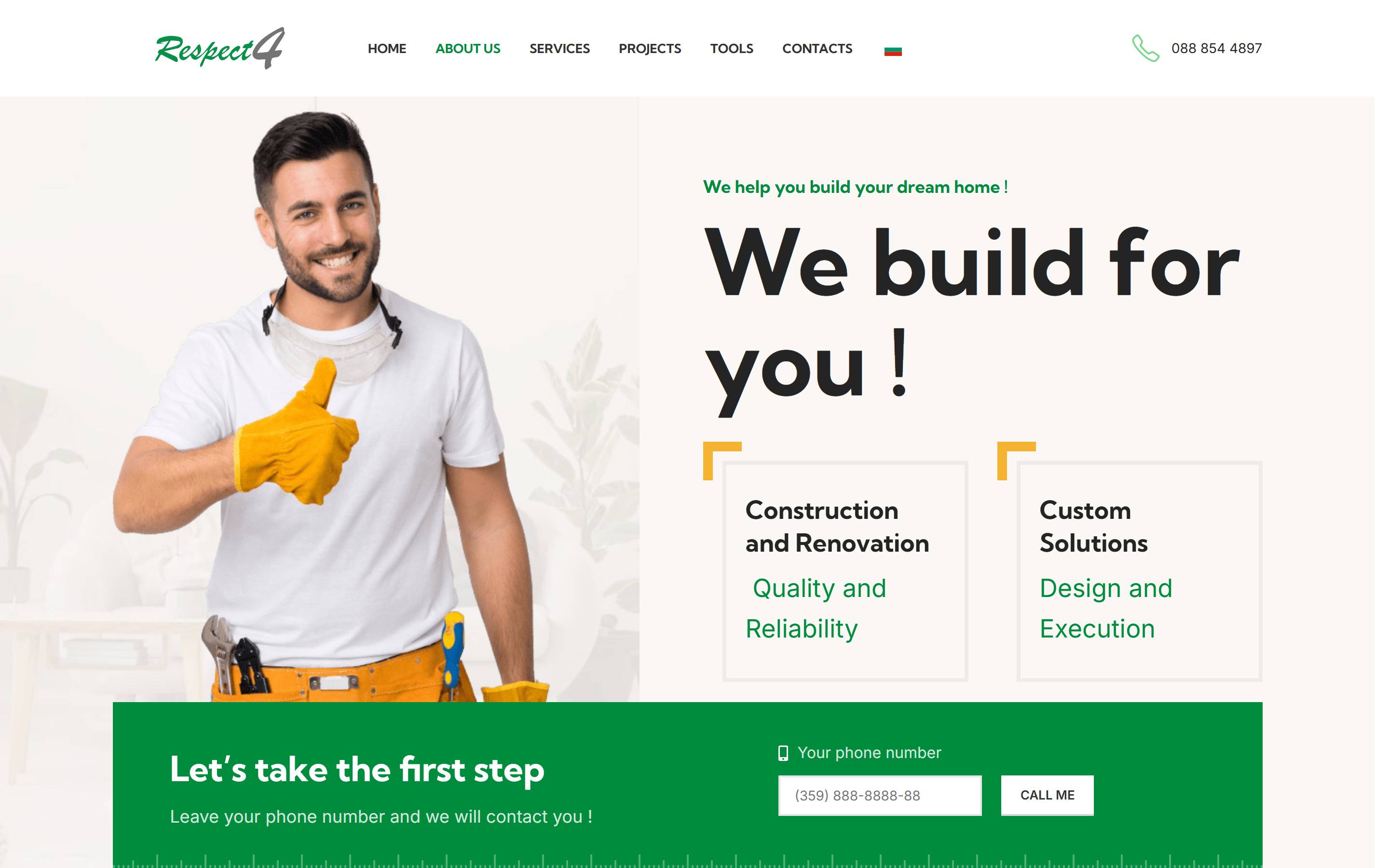
Our portfolio doesn’t include a plumbing firm. The nearest live example is Respect 4, a construction and renovation company whose page is built around one action: leaving a phone number. A callback form with a single phone field sits at the top of the page and again near the bottom, next to a clickable number in the header. That pattern suits a plumber well, for the customer who can’t talk right now but wants a call back.
What to prepare before the build
Bring a list of the jobs you want more of (and the ones you’d rather not take), your callout and hourly pricing, and the postcodes you cover. Add the number that will actually be answered, your registration numbers, and 15–30 photos of real work: tidy boiler installs, finished bathrooms, before-and-after repairs. Access to your Google Business Profile helps too, so the hours and areas match. Once we have that content, most sites go live in 7–10 days, and the plan costs €0 upfront and €150 a month excl. VAT for 24 months (roughly £130 or $175).
Compare the pay monthly website plan with a one-off build in our guide to small business website costs, or tell us about your business.