Short answer: A physio or private clinic website should help a patient in pain answer three questions quickly. Do you treat my problem? Who will I see? When can I come in? That means condition pages in plain language, practitioner profiles with real registrations, visible fees and insurers, online booking, and careful handling of anything health-related.
How do patients actually pick a clinic?
Most patients start with their symptom, not your profession: “lower back pain physio [town]”, “sports massage near me”, “tennis elbow treatment”, “chiropractor open Saturday”. Many can now book a physiotherapist directly without a GP referral. So the decision is theirs, made on a phone, often between two or three nearby clinics in the map results.
What tips it is usually concrete. Is there a page that describes their exact problem? Can they see who the practitioner is and what they specialise in? Is there an appointment this week, close to work or home? Insured patients add another filter: are you recognised by their insurer? Reviews matter, but they mostly confirm a choice the website has already started to make.
So the structure follows the patient. Start with a conditions section: back and neck pain, sports injuries, post-surgery rehab, headaches, pregnancy-related pain, or whatever you genuinely see a lot of. Each page links to the treatments involved and ends with a booking button. Add practitioner profiles with a photo, qualifications and special interests, and a fees page with session lengths and packages. Then add a “your first appointment” page. It covers what to wear, how long it takes and what happens, and quietly answers the nervous questions people don’t ask on the phone.
Condition pages that don’t overpromise
Patients want reassurance, and it’s tempting to promise it. Don’t. Advertising rules apply to clinic websites as well as adverts. In the UK, the Advertising Standards Authority expects health claims to be backed by evidence. Its advice on physiotherapy claims accepts claims about general aches, backache and minor sports injuries. Claims to treat other conditions need robust evidence, usually clinical trials. The safe and more credible approach is to explain the condition, how you assess it and which treatments you use, without promising outcomes or timescales.
Titles matter too. In the UK, “physiotherapist” is a protected title that requires HCPC registration. Chiropractors and osteopaths have their own statutory registers (GCC and GOsC). Put each practitioner’s registration on their profile, because patients and insurers do check. Other countries have their own regulators, and we use whatever applies to your team.
Where does patient data go?
A clinic site handles information that is sensitive by nature. Under GDPR, health data is special category data. The simplest protection is not to collect it where you don’t need it. Website contact forms ask for a name, contact details and a preferred time, not symptoms or history. Clinical intake belongs in your practice management or booking system (Cliniko, Jane, WriteUpp or similar). These are built to store it securely, and the website links to them rather than copying the data.
The privacy notice should say what the site collects and why. Analytics can run without tracking cookies, or be left out. Testimonials and patient stories appear only with written consent.
A comparable build: Optimus Center
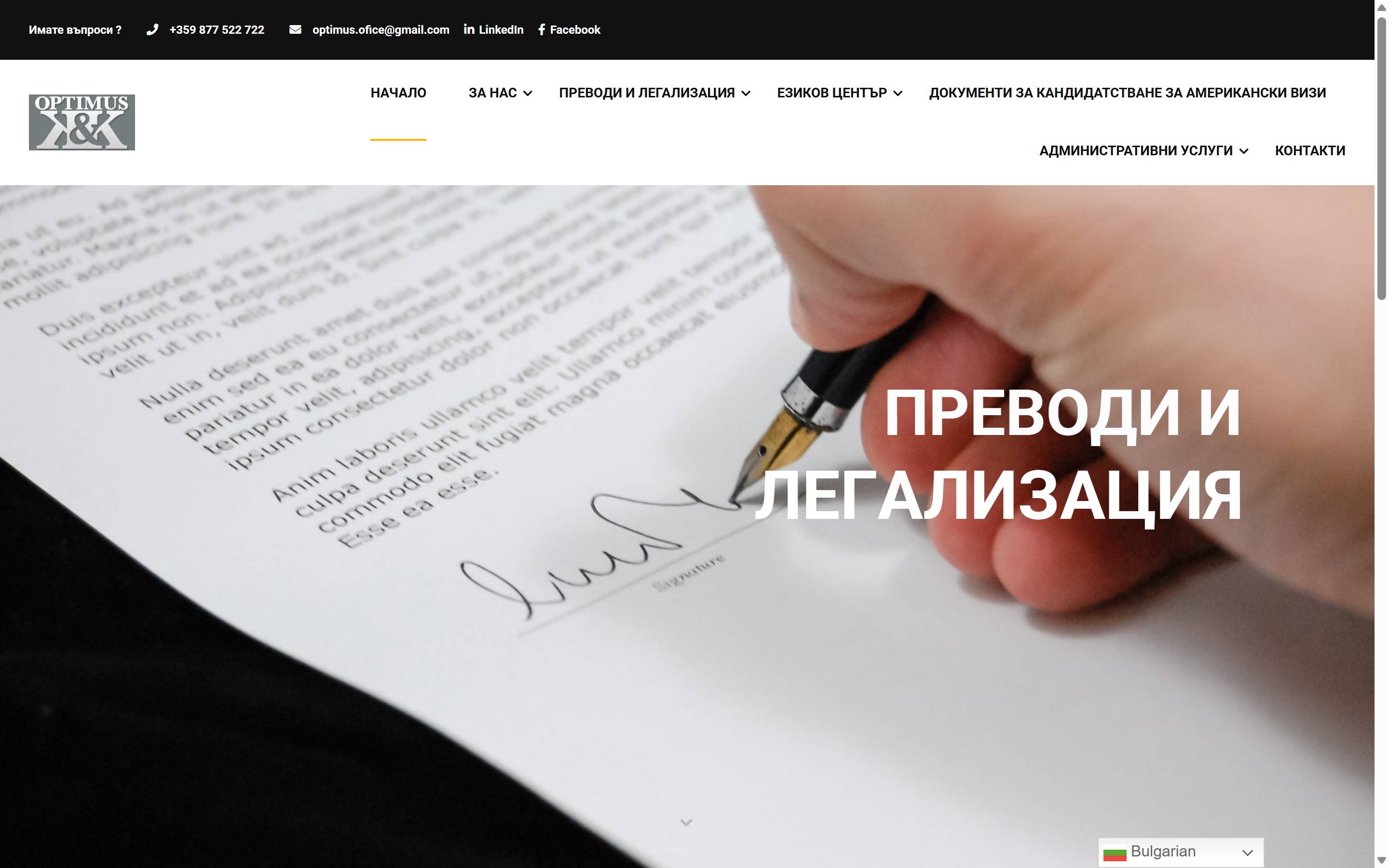
There is no physiotherapy clinic in our portfolio. The closest live example is Optimus Center, a translation agency and language centre in Vratsa. Each course has its own page explaining levels, formats and what’s included, so every offering has its own address to share and be found in search. The home page carries a short sign-up form, and a long FAQ answers questions before people need to call. That is the same pattern as a condition page leading to booking.
To prepare, list the conditions you most want to see. Add practitioner bios and registration numbers, fees and packages, the insurers you’re recognised by and your booking system link. On the monthly plan the build costs nothing upfront, then €150 a month excl. VAT for 24 months, about £130 or $175.
See our approach to website design, use the website preparation checklist, or ask for a proposal.