Short answer: A therapist’s website should help someone decide, quietly and without pressure, whether you are the right person to contact. It needs your approach in plain words, the issues you work with, your registration, fees and session details, and a first-contact option that collects almost nothing, protects privacy and says what happens next.
Who is reading your site, and when?
Most people looking for therapy don’t land on your homepage cold. They search “anxiety counselling [town]”, “online CBT therapist”, “couples counselling near me” or “therapist who works with grief”, and often end up on a directory such as Psychology Today or Counselling Directory first. From there, the ones who are seriously considering you click through to your own site. Others come by referral from a GP, an employer scheme or a friend, and look you up before writing.
They are often reading late at night, on a phone, unsure whether to reach out at all. They aren’t comparing features. They want to know whether you’ll understand them, what sessions are actually like, whether they can afford it and what happens after they press send. Every page should answer one of those questions.
Writing about yourself without jargon
The “about” page carries most of the weight, and it’s where many therapy sites go wrong: a list of modalities and acronyms that means little to someone who’s never had therapy. Lead with the people and issues you work with. Then describe how you work in everyday language (“we’ll look at patterns that keep repeating” rather than a paragraph on theoretical orientation). Keep the training list further down. A real, warm photo of you helps more than stock images of rainy windows.
Be precise about titles and registration. In the UK, “counsellor” and “psychotherapist” are not protected titles. Clients look instead for membership of a register accredited by the Professional Standards Authority, such as BACP, UKCP or NCPS. “Clinical psychologist” and “counselling psychologist” are protected titles that require HCPC registration. Name your register and membership number, and the ethical framework you follow. Avoid promising outcomes; describe what you offer, not what it will fix.
What should the first-contact form ask?
Very little. A first message needs a name, an email or phone number, and an optional short note. It shouldn’t ask about symptoms, medication or history: under GDPR that is special-category health data, and collecting it in a website form creates risk for no benefit. Messages arrive in your inbox; if you’d rather move first conversations to a secure email or practice platform, the site can link there instead.
Say what happens next: when you usually reply, whether there’s a free introductory call, and that you’ll never pass details on. Add a short note that you’re not an emergency service, with the emergency number and a crisis line for your country. In the UK and Ireland that is often Samaritans on 116 123. Analytics can run without tracking cookies, or not at all; nothing on the page should follow your clients round the internet.
A site with a similar personal focus
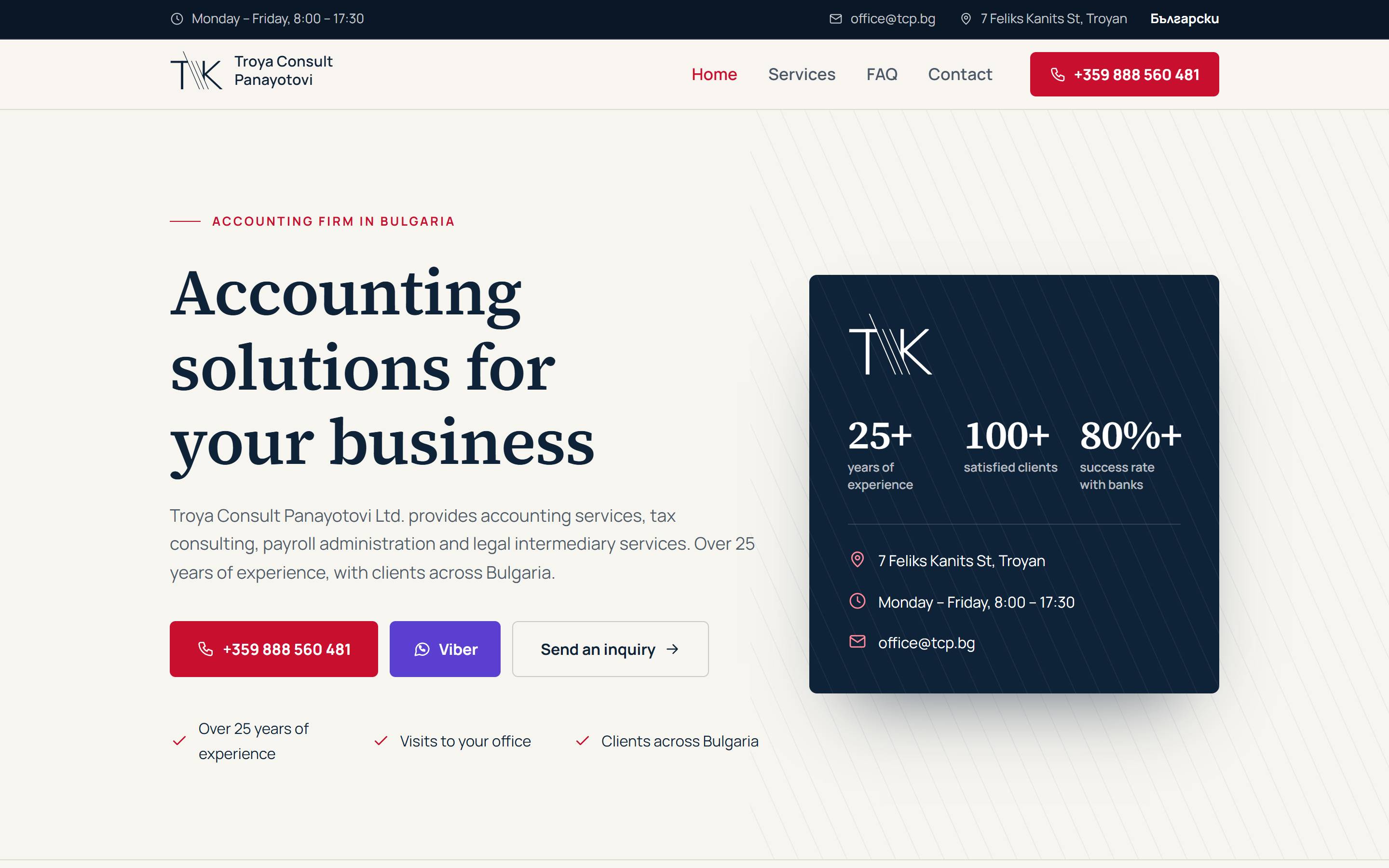
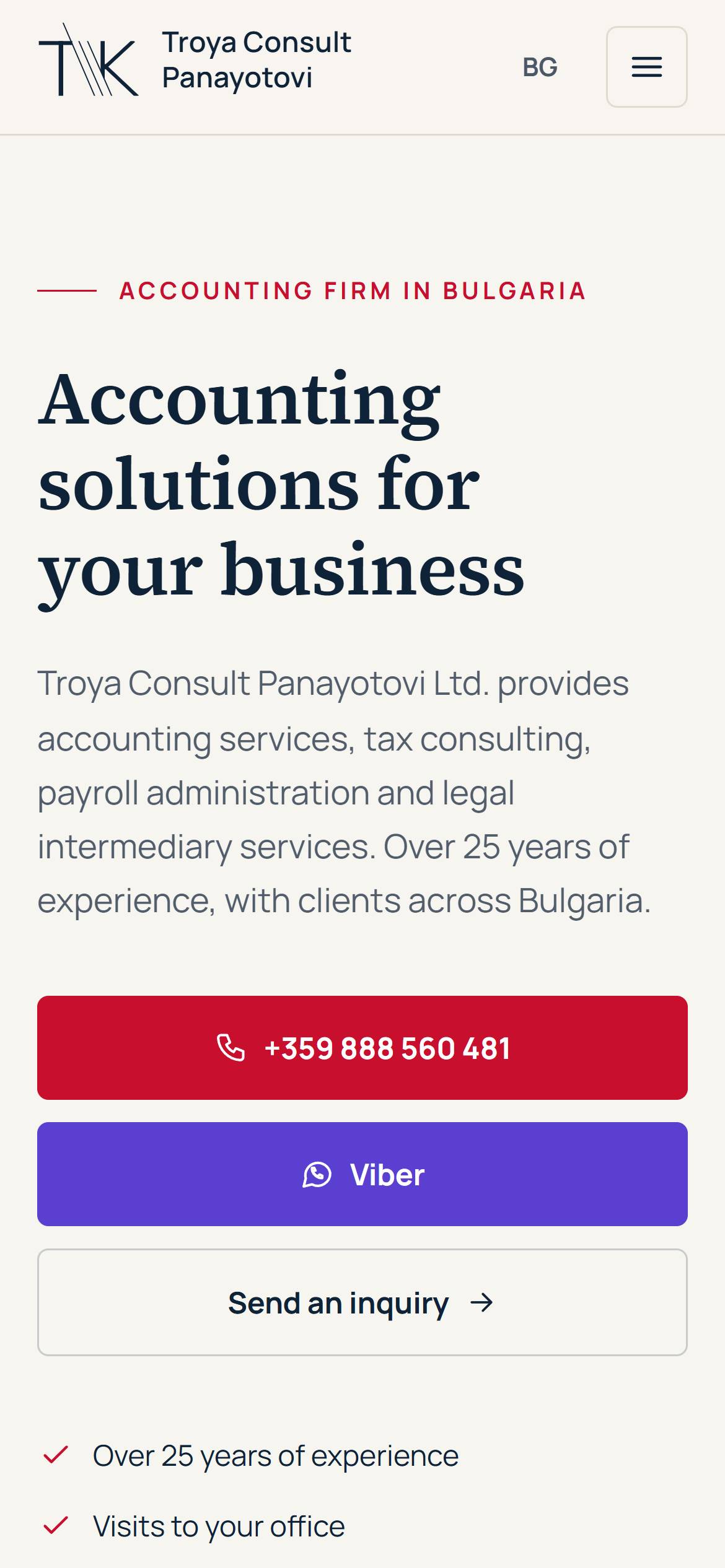
There is no therapy practice in our portfolio. The nearest live example is Troya Consult, a small firm in Troyan. Its site keeps the firm’s own wording for every service, answers ten common questions on a FAQ page, and offers a calm, spam-protected enquiry form next to the phone numbers and working hours. A therapy site needs the same plain, personal tone and one clear way to make first contact, in a quieter register.
Before we write anything, decide how you want first contact to work (form, introductory call or direct booking), gather your registration details, fees and concessions, and note the issues you most want to work with. Our monthly plan has no upfront cost and runs at €150 a month excl. VAT for 24 months.
Read why a website as a service suits a solo practice, see pricing, or send us a short message.