Short answer: a website for a law firm should show a worried person that you handle their exact problem. It should introduce the lawyer they’d speak to, explain fees and next steps plainly, and make first contact easy without inviting confidential details too early. It must also meet your regulator’s rules on publicity, transparency and regulatory information.
What is someone with a legal problem actually searching for?
Most clients don’t search for an area of law. They search for their situation: “unfair dismissal solicitor [city]”, “how long does probate take”, “divorce lawyer near me”, “landlord won’t return deposit”. Businesses search more precisely, for example “commercial lease solicitor” or “debt recovery for small business”. Many also search the name of a lawyer they were referred to, before they ring.
That shapes the site. Each practice area needs its own page, written from the client’s side. Say who you act for, the typical situations and how the process usually unfolds. Explain what the first meeting involves and what to bring. Jargon makes a frightened reader feel worse. Plain English tells them they’ve found someone who will explain things.
Reviews matter in legal searches, so link to the platforms where your clients review you. Testimonials on your own site must follow your regulator’s rules and need the client’s consent.
Which professional rules shape the site?
Rules differ by jurisdiction, so we treat this as a checklist to agree with you, not legal advice.
- England and Wales: under the SRA Transparency Rules, regulated firms must show their SRA number and the SRA digital badge prominently on their website. They must also publish their complaints procedure. Firms offering certain services must publish price and service information. These include residential conveyancing, uncontested probate, unfair or wrongful dismissal claims at the employment tribunal, and some immigration work.
- United States: state bar rules, based largely on the ABA Model Rules, prohibit false or misleading communications. Some states also require “attorney advertising” labels or disclaimers.
- EU countries: national bar associations set their own publicity rules. Some are strict about comparative claims and how specialisation is described.
Across all of them, the safe pattern is the same. Make no guaranteed outcomes or unsupported “leading” or “best” claims. Don’t present case results without context. Put clear regulatory information in the footer.
Practice area pages, people pages and first contact
People hire people. A lawyer profile should give admissions, years in practice, areas of focus, languages spoken and a professional photo. That matters more than a page of firm history. Link each practice area to the lawyers who handle it.
First contact needs care. A form that invites someone to describe their case can bring in confidential details before you’ve run a conflict check. Ours asks for name, contact details, the area of law and the other party’s name for conflict purposes. It tells people not to include confidential information yet and links to your privacy notice. It can also say that submitting the form doesn’t create a lawyer-client relationship. If you use an online booking tool for initial consultations, we embed it.
An articles section can answer common questions, such as “what happens at a first divorce consultation”. It helps clients and search alike, but only if someone at the firm keeps it accurate.
Pitfalls, preparation and a comparable project
Common problems on law firm websites include stock photos of gavels and scales. Others are “we fight for you” slogans that sit badly with professional rules, a news page abandoned years ago, and fee pages that contradict what the firm actually charges.
Before the build, list your practice areas in order of priority. Prepare short profiles and photos of your lawyers, your regulatory details and complaints procedure, and the fee information you publish or must publish. Decide who will approve copy.
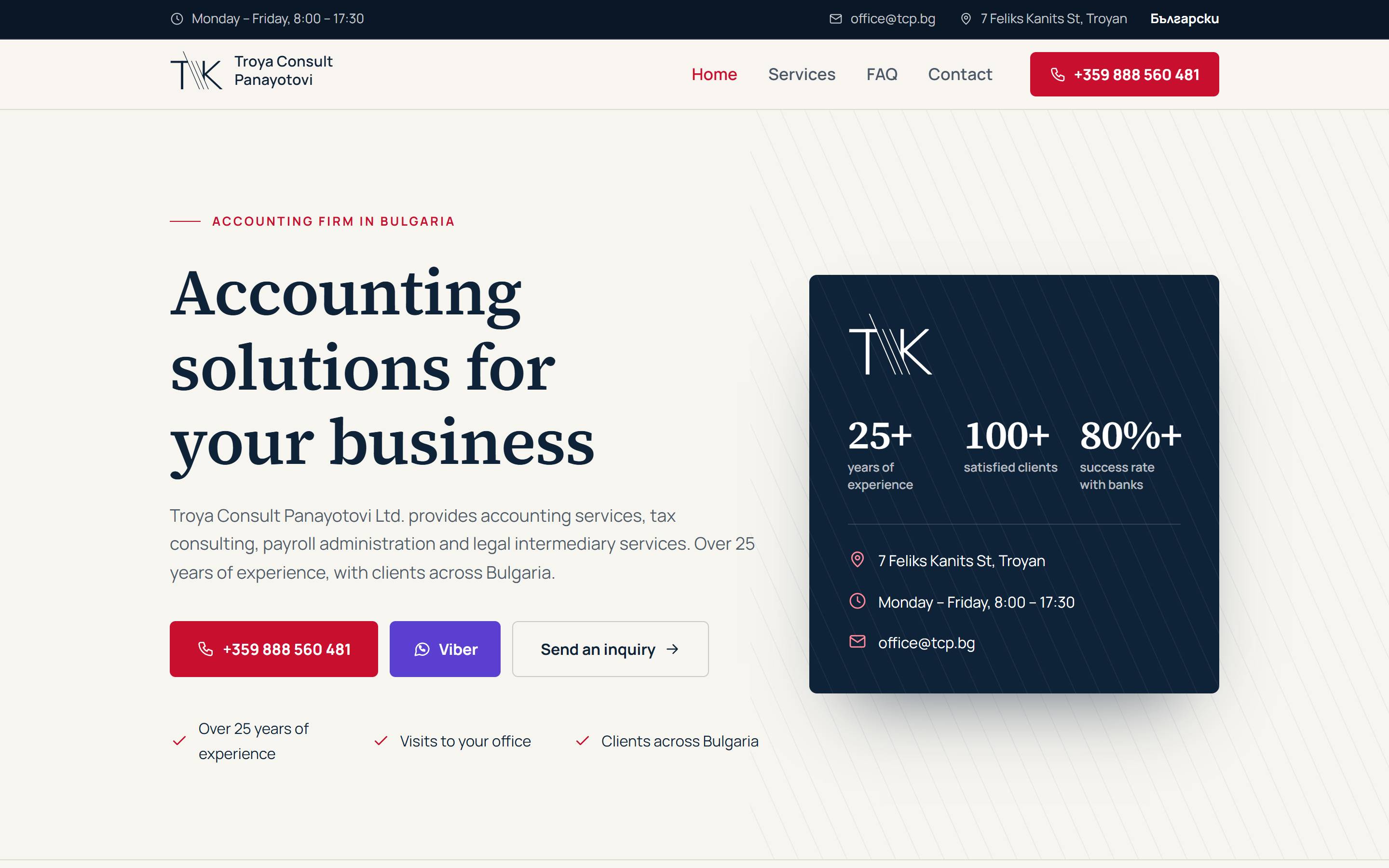
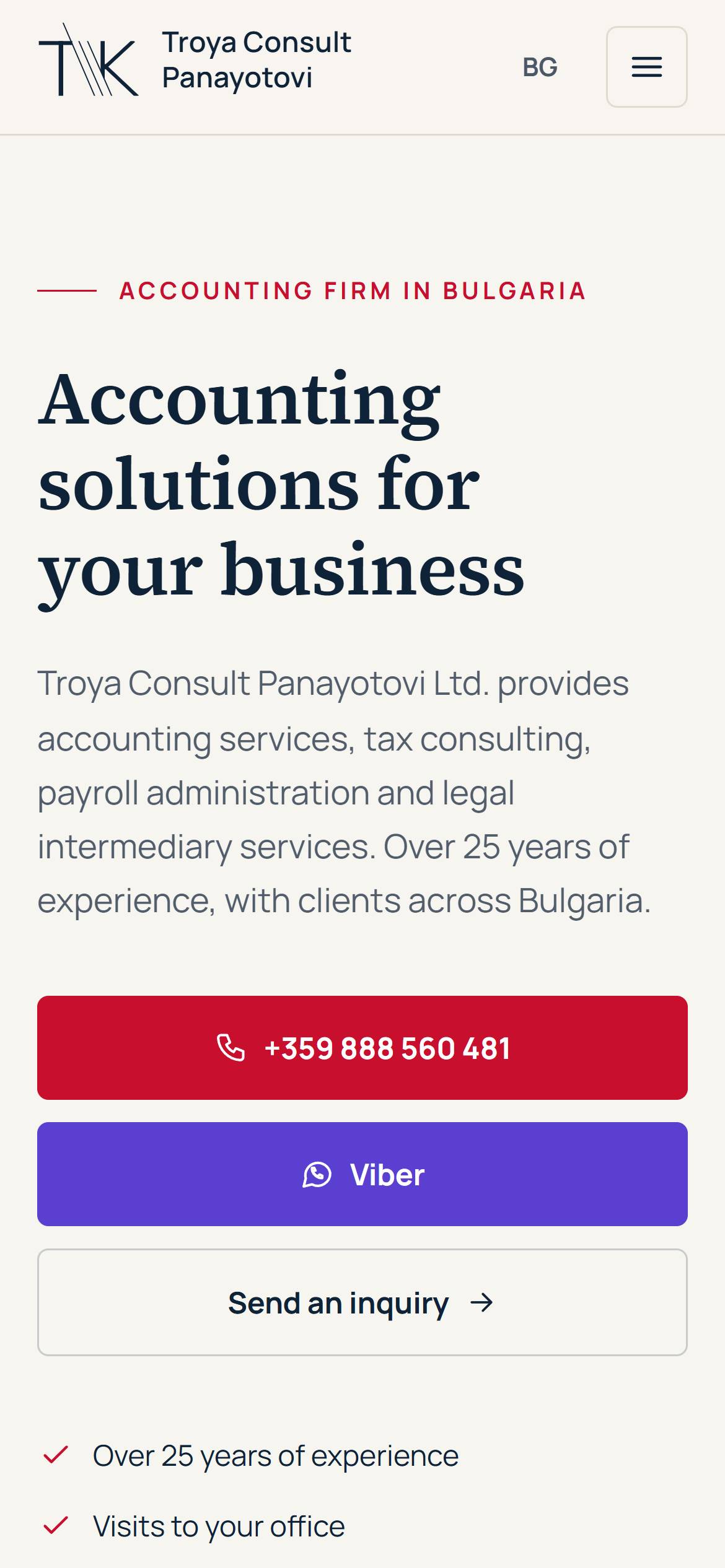
No law firm appears in our current portfolio. The nearest is Troya Consult, a professional-services site for an accounting firm. It has service pages, one-tap calling and an enquiry form in two languages. A small law practice needs the same plain, structured approach.
For most small firms there’s no build fee, then €150 a month excl. VAT for two years (around £130 / $175). See the pay monthly plan, read about monthly websites versus a one-time build, or ask for a proposal.